Season changes which allergen job is worth doing now. Closed-up winter homes concentrate whatever is already indoors, while dust mite populations rise and fall with humidity, so the same effort pays off very differently depending on when you spend it.
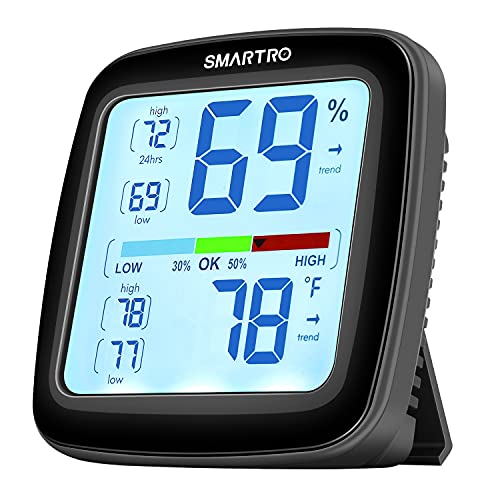
A hygrometer is the cheapest tool that makes any of this concrete. Knowing that the bedroom sits at 60 percent relative humidity in August and 30 percent in January turns seasonal advice into a specific instruction, and it is the single measurement that most changes what is worth doing when.
- Fall is a practical time to establish/refresh your routine ahead of winter’s concentration effect.
- Humid seasons warrant particular attention to dust mite-specific mitigation.
- Core allergen reduction routine should continue year-round, not just seasonally.
- Seasonal patterns inform timing priority without replacing the need for ongoing routine.
Fall Preparation Ahead of Winter Concentration
Given winter’s tendency to concentrate indoor allergens due to reduced ventilation, fall is a practical time to establish or refresh your allergen reduction routine (bedding replacement, HVAC filter change, deep cleaning) before the higher-concentration season begins.
- Replace the HVAC filter and confirm the rating is what the system is designed to take. A higher-rated filter that throttles airflow helps nobody.
- Deep clean bedding, and replace encasements that have split seams or failed zips.
- Vacuum and clean supply and return registers, which collect settled dust all summer and then get blown through all winter.
- Service humidifiers and dehumidifiers before the season they are needed, not during it.
- Fit fresh purifier filters so the units go into the closed-up months at full capacity.
Winter itself brings a specific trap. Running a humidifier hard against dry heated air is comfortable, but pushing relative humidity above about 50 percent recreates exactly the conditions dust mites need [1]. Aim for the lower end of the comfortable range and check it with a meter rather than by feel.
Humid-Season Dust Mite Attention
In climates with seasonal humidity peaks, that period warrants particular attention to dust mite-specific mitigation (dehumidification, bedding management) given the more favorable conditions for mite populations during that time.
This is the season where effort compounds, because mite populations build during humid months and the allergen they leave behind persists long after the humidity drops. Holding indoor relative humidity below roughly 50 percent through the humid stretch, using air conditioning or a dehumidifier, suppresses the population that would otherwise be loading your bedding for the rest of the year [2].
Spring has a different job. Outdoor pollen infiltrates through open windows and on clothing and pets, so the useful moves are closing windows during high-pollen periods, shortening the HVAC filter change interval, and running bedroom filtration consistently rather than reactively.

Ongoing Routine Regardless of Season
While these seasonal patterns inform timing priority, the core allergen reduction routine (regular cleaning, bedding washing, filtration) should continue year-round rather than being treated as a seasonal-only task.
- Weekly: hot-wash sheets and pillowcases.
- Monthly: clean or replace purifier pre-filters, and check the hygrometer reading in the bedroom.
- On the manufacturer’s schedule: HVAC and purifier filter replacement, regardless of season.
- Annually: inspect encasements, reassess whether the routine still matches the household.
Two moments are worth treating as free resets even though they are not seasonal. Moving house is the easiest time to encase a mattress and to decide about flooring, and any renovation that opens up floors or ductwork is the cheapest opportunity you will get to replace carpet with a hard surface.
FAQ
Should I only worry about allergen reduction in the winter?
No — while winter’s concentration effect and humid-season dust mite patterns inform timing priority, ongoing routine (cleaning, bedding, filtration) should continue year-round.
What is the highest-value thing to do in summer?
Keep indoor relative humidity below roughly 50 percent. Mites take water from the air, so the humid months determine how large the population gets, and that population is what loads bedding for the rest of the year.
Does winter dryness solve the dust mite problem?
It suppresses live mites, but the allergen already deposited in bedding, carpet and upholstery remains and is stirred up by heating and reduced ventilation. Low humidity is a control on future populations, not a cleanup.
Is there a wrong time of year to start?
No. The weekly and monthly routine items pay off whenever they begin, and the seasonal jobs simply queue up for the next window. Waiting for autumn to encase a mattress costs a season for no reason.
Seasonal timing informs priority, but allergen reduction is fundamentally an ongoing, year-round routine.
References
- Dust Mites and Cockroaches. National Institute of Environmental Health Sciences
- A Brief Guide to Mold, Moisture and Your Home. U.S. Environmental Protection Agency
These statements have not been evaluated by the Food and Drug Administration. This information is not intended to diagnose, treat, cure, or prevent any disease. Content is for informational purposes only and is not medical advice; consult a qualified healthcare provider before starting any supplement. As an Amazon Associate we earn from qualifying purchases.
